分布式ID的常见3种做法
分布式ID的常见3种做法
UUID
格式
长度 32、16 进制。
形如:550e8400-e29b-41d4-a716-446655440000
优点
- 数量多:UUID 理论上的总数为 16^32 =2^128 约等于 3.4 x 10^38。也就是说若每纳秒(ns)产生 1 万亿个 UUID,要花 100 亿年才会将所有 UUID 用完。
- 位数长,涉及 mac 地址,很难重复
- 本地生成,无网络消耗
缺点
- 不携带信息。例如不递增,不含有业务含义
- 长度长,占用位数多。32 bytes = 32 x 8 bits = 256 bits
- 作为 mysql 主键,太长会影响 mysql 性能,无序性会导致位置变动频繁
数据库唯一ID
单机自增
优点:实现简单。
缺点:单机是性能瓶颈。
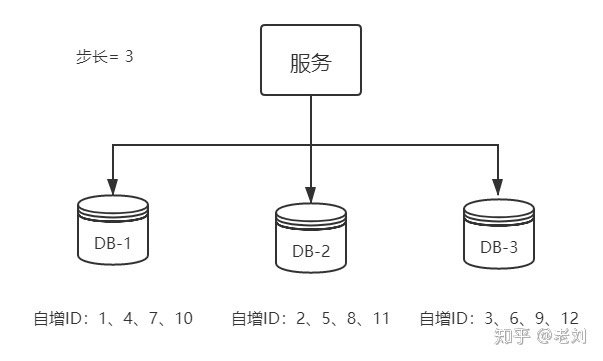
集群自增
设置不同的「自增步长」和「自增步长」。
1
2
3
# 代码demo
set @@auto_increment_offset = 1;     -- 起始值
set @@auto_increment_increment = 2;  -- 步长
缺点:新增机器容易出现重复问题,需要人工介入。
号段模式(主流)
思想是从数据库批量获取自增 ID。
重点是数据表设计:
1
2
3
4
5
6
7
8
CREATE TABLE id_generator (
  id int(10) NOT NULL,
  biz_type int(20) NOT NULL COMMENT '业务标识',
  max_id bigint(20) NOT NULL COMMENT '业务标识对应的当前最大id',
  step int(20) NOT NULL COMMENT '业务标识对应的号段步长',
  version int(20) NOT NULL COMMENT '版本号', // 乐观锁,每次都更新version,保证并发时数据的正确性
  PRIMARY KEY (`id`)
)
流程是:
从数据库取出号段范围,例如 1000-2000 使用乐观锁,防止并发问题:
1
2
3
4
5
6
7
  update id_generator
  set
  max_id = #{max_id+step},
  version = version + 1
  where
  version = # {version} // 防止并发问题
  and biz_type = XXX
- 本地化存储取出的号段,例如放入内存
- 使用取出的号段
- 用完后,回到第一步,继续取出 2k-3k
- 如此循环
Snowflake雪花算法
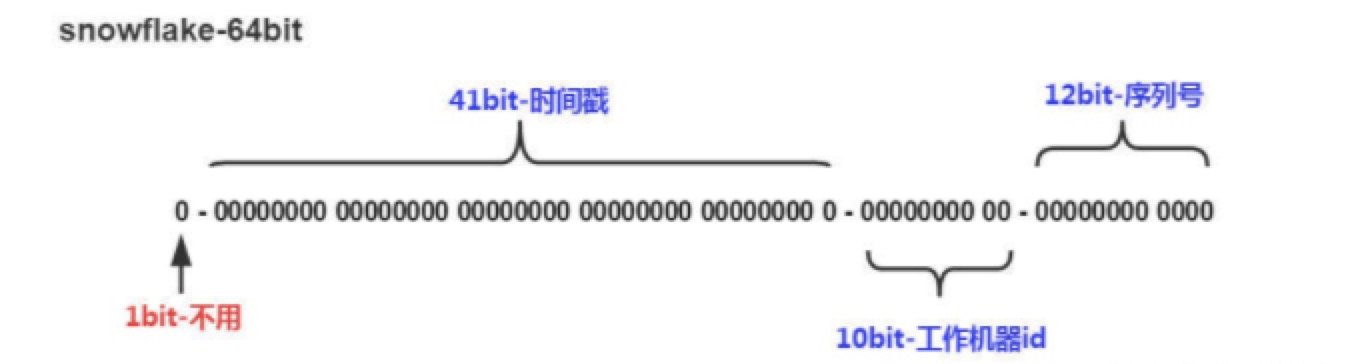
- 1bit:默认为 0,代表+-
- 时间戳:单位 ms,通常采用相对时间戳。当前时间戳 - 指定开始时间戳
- 工作机器:机房、机器号或者其组合
- 序列号:12bit,支持同一 ms 下,生成 2^12 个 ID
二次封装
- 美团 Leaf:支持号段+雪花算法
代码实现
实现的关键点是:nextId() 函数。
- 系统时间回拨:直接抛错
- ID 上限:通过对 2^12 取余实现。
1
2
3
4
5
6
7
8
9
10
11
12
13
14
15
16
17
18
19
20
21
22
23
24
25
26
27
28
29
30
31
32
33
34
35
36
37
38
39
40
41
42
43
44
45
46
47
48
49
50
51
52
53
54
55
56
57
58
59
60
61
62
63
64
65
66
67
68
69
70
71
72
73
74
75
76
77
public class IdWorker{
    private long workerId;
    private long datacenterId;
    private long sequence = 0;
    /**
     * 2018/9/29日,从此时开始计算,可以用到2089年
     */
    private long twepoch = 1538211907857L;

    private long workerIdBits = 5L;
    private long datacenterIdBits = 5L;
    private long sequenceBits = 12L;

    private long workerIdShift = sequenceBits;
    private long datacenterIdShift = sequenceBits + workerIdBits;
    private long timestampLeftShift = sequenceBits + workerIdBits + datacenterIdBits;
    // 得到0000000000000000000000000000000000000000000000000000111111111111
    private long sequenceMask = -1L ^ (-1L << sequenceBits);

    private long lastTimestamp = -1L;


    public IdWorker(long workerId, long datacenterId){
        this.workerId = workerId;
        this.datacenterId = datacenterId;
    }
    public synchronized long nextId() {
        long timestamp = timeGen();
        //时间回拨,抛出异常
        if (timestamp < lastTimestamp) {
            System.err.printf("clock is moving backwards.  Rejecting requests until %d.", lastTimestamp);
            throw new RuntimeException(String.format("Clock moved backwards.  Refusing to generate id for %d milliseconds",
                    lastTimestamp - timestamp));
        }

        if (lastTimestamp == timestamp) {
            sequence = (sequence + 1) & sequenceMask;
            if (sequence == 0) {
                timestamp = tilNextMillis(lastTimestamp);
            }
        } else {
            sequence = 0;
        }

        lastTimestamp = timestamp;
        return ((timestamp - twepoch) << timestampLeftShift) |
                (datacenterId << datacenterIdShift) |
                (workerId << workerIdShift) |
                sequence;
    }

    /**
     * 当前ms已经满了
     * @param lastTimestamp
     * @return
     */
    private long tilNextMillis(long lastTimestamp) {
        long timestamp = timeGen();
        while (timestamp <= lastTimestamp) {
            timestamp = timeGen();
        }
        return timestamp;
    }

    private long timeGen(){
        return System.currentTimeMillis();
    }

    public static void main(String[] args) {
        IdWorker worker = new IdWorker(1,1);
        for (int i = 0; i < 30; i++) {
            System.out.println(worker.nextId());
        }
    }

}
本文由作者按照 CC BY 4.0 进行授权